“Anything is fine” sounds easygoing. Then you spend three evenings comparing restaurants, nobody picks a time, and the date stays in the chat.
A good first-date plan removes a few decisions. It is specific enough to happen and flexible enough to fit two actual people. For adults dating with HSV, that practical clarity can leave more attention for the conversation.
The schedules and messages below are planning examples, not member stories or venue packages.
Make an invitation someone can answer
Try a sentence with four pieces: interest, activity, time, and flexibility. “I’d like to meet you. Would coffee in central Phoenix on Saturday at 11 work? I have about an hour, and we can choose another area if that is easier.”
This lets the other person answer a real proposal. It is more useful than asking what they are doing all weekend, and less demanding than presenting a finished itinerary with reservations already made. Do not buy tickets or make a nonrefundable booking for two without agreement.
Give someone one alternative if the timing does not work. If neither option fits, ask them to suggest a time they can genuinely keep. Repeated vagueness may mean the plan is not ready; you do not need to do all the scheduling work indefinitely.
Keep the spending comfortable
If you are worried about the bill, part of your attention will stay on the menu instead of the person. Choose something you could comfortably pay for yourself. If tickets are involved, agree on them beforehand. Do not assume that a more expensive plan communicates greater sincerity.
You can say, “I’d prefer something simple for the first meeting,” without explaining your finances. If you want separate checks, mention it naturally. Generosity is welcome when freely offered, but it should not create an expectation of physical affection, more time, or another date.
Someone’s response to a small budget preference can be useful information. A compatible person does not need to share all your spending habits, but they should be able to discuss a modest plan without belittling it.
Settle the last five minutes of the journey
Choose a specific entrance and a recognizable public waiting point. A large complex, a waterfront, or an arts district is not an exact location. Send a short arrival message through your existing communication channel and stay in the agreed public area.
Arrange your own travel and return. Tell a trusted person where you are meeting and roughly when you expect to finish. Avoid revealing your home address simply to make collection convenient. A good first date should not depend on trusting someone with more information than you are ready to share.
If you are late, give a realistic update. “Running about ten minutes behind; I understand if that affects your finish time” respects the other person’s schedule. If the delay would consume most of the meeting, offer to rearrange rather than expecting them to wait indefinitely.
What a small plan can look like
This sample hour is a way to think about the meeting, not a timetable to enforce. Adjust it to your needs and keep the finish comfortable for either person.
- 00:00
Find each other, then settle in
Meet at the agreed entrance. Order, choose seats, and let the first few minutes be ordinary.
- 00:10
Follow one interesting detail
Ask about something you remember from the conversation online. Share an answer of your own.
- 00:45
Check in without a test
If you would like to stay longer, ask. A need to leave is not automatically a rejection.
- 01:00
Leave a little conversation for next time
Finish as agreed. If you enjoyed it, say so; you can arrange another date after you have both had time to reflect.
Choose the area before choosing the venue
Use our Arizona city comparison to choose the relevant local guide. It separates location, opening-time, admission and transport decisions so this article can focus on what happens during the first meeting.
Build the indoor alternative into the invitation
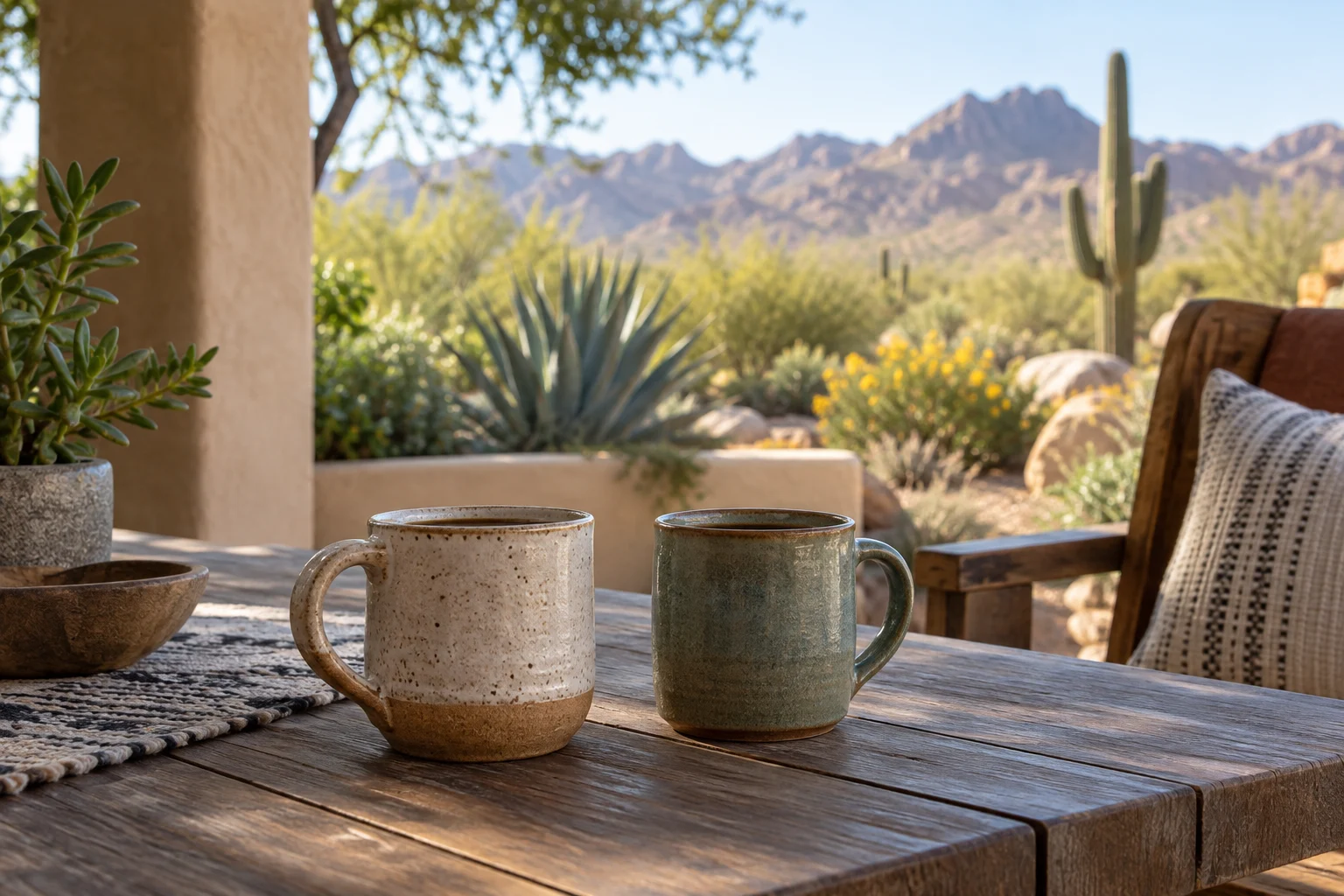
An Arizona date does not have to include a desert walk to feel local. A comfortable indoor table is often a better setting for a first conversation than an outdoor plan chosen because it looks beautiful in photographs.
Check the National Weather Service’s Phoenix-area heat information when planning around the Valley, and review the local forecast for the actual location. Weather can change the suitability of a route or patio; do not assume that a particular month or an earlier forecast guarantees comfort.
Make the backup specific. “We can sit inside at the same place” is useful only if it has indoor seating available. Call or check current venue information when needed. If the plan requires a long walk between stops, reconsider whether a shorter outing would work better.
It is the morning of a first date. You had suggested a patio, but the conditions no longer look comfortable. You send: “Still looking forward to meeting. Shall we switch to an indoor table? Same time, and we can skip the walk.”
Your match replies with a relieved yes. The change has made the date easier without turning it into a drama.
Let the person be more interesting than the plan
You do not need a set of questions designed to reveal a person’s entire character in an hour. Start with something from their profile that you actually noticed. If they mention learning to cook, ask what they have made more than once. If they enjoy music, ask what they listen to on an ordinary drive.
Share your own answer too. A string of questions can make someone feel interviewed, even when you mean to be attentive. A small story about a failed recipe or an unfinished book gives the other person something to respond to without demanding instant intimacy.
When dating with HSV, it can be tempting to interpret every pause as anxiety about the diagnosis. A pause might simply mean someone is shy, tired, or thinking. Ask rather than writing a whole explanation in your head.
Keep sensitive conversations unhurried
If you need to discuss herpes before sexual contact, make room for that conversation separately from the momentum of the date. You do not have to bring it up in a noisy venue or with a waiter standing beside the table. Our guide to disclosing herpes covers timing, sample wording, and handling questions.
An ending should not feel like an escape
Agreeing on an approximate duration makes leaving ordinary. “I have about an hour” gives both people useful information. It also means a good date can end while you still have more to talk about. You do not have to exhaust the conversation to demonstrate interest.
If you want to extend the meeting, ask openly: “I’m enjoying this. Would you like to stay another half hour, or shall we plan another day?” Leave room for the second answer to be equally welcome. Someone may like you and still need to leave.
If you feel uncomfortable, you do not need to complete the planned time. Move toward staff or another public area if necessary, leave using your own arrangements, and ask for help when appropriate. See our dating safety guidance for practical precautions; no venue or plan can guarantee safety.
Send a message that only belongs to this date
A specific message feels more personal than a polished paragraph. “I’m still laughing about your attempt at homemade pasta. I enjoyed meeting you” tells someone you paid attention. If you want another date, add a realistic suggestion instead of hoping they infer it.
If the connection is not right, be brief and respectful. There is no need to analyze the person’s appearance or health. You can appreciate the meeting and decline another. If someone does not respond, avoid repeatedly contacting them through new channels.
A few decisions people tend to overthink
Is coffee too ordinary?
Ordinary can be useful. It usually allows a manageable time window and a conversation without a major commitment. Choose a setting you both like rather than an activity designed to impress an imagined audience.
Should we hike for a first meeting?
A remote or demanding route adds weather, access, and exit considerations. A short staffed public venue is a simpler starting point. Save activities that require more trust and planning for when you know each other better.
What if we live in different Arizona cities?
Discuss repeat travel and expectations before making a long journey. Keep independent arrangements and avoid treating distance as a reason to agree to an overnight stay. A call beforehand may help you decide whether to meet.
Where can I find more local information?
Start with the six Arizona city guides, then follow their official venue and tourism sources. Check current details again close to the date; an editorial recommendation is not a live booking service.